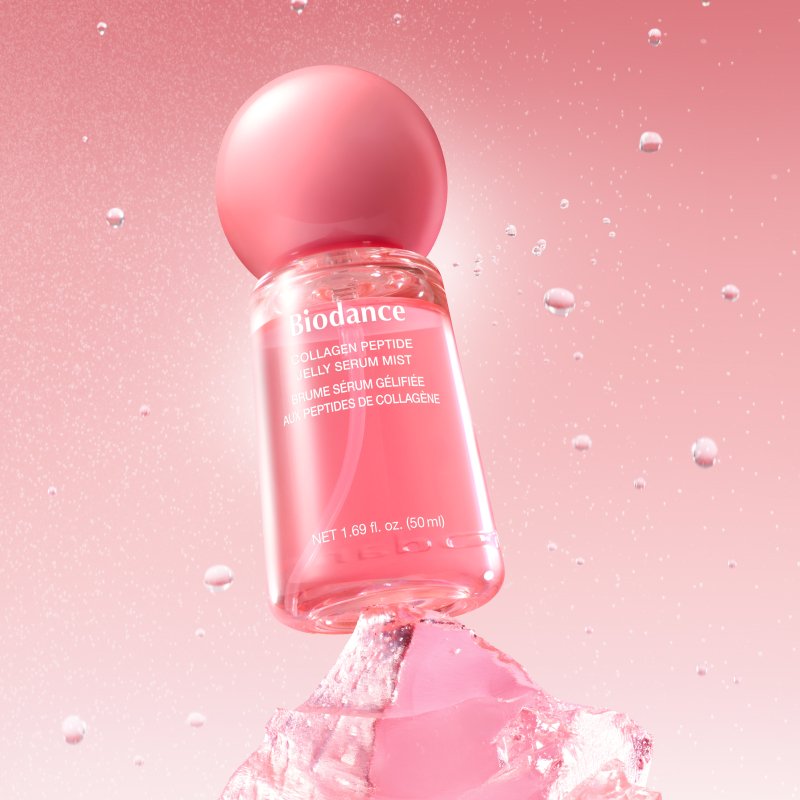

The launch of the Biodance Collagen Peptide Jelly Serum Mist as an Olive Young exclusive has triggered a fascinating phenomenon. 😮 Consumers using the exact same product are leaving polar opposite reviews! While some praise it as an “innovative mist that completely kicks dryness to the curb,” others slam it as a “disappointment that lacks the hyped cooling effect and just leaves an oily film.” The gap between these reviews is way too wide to write off as mere personal preference. What this product has really exposed is a deeper issue in the K-beauty market—the disconnect between functional marketing and real-world user experience, along with a clash between different skin types! 💯
📌 Just the Core Facts, Sorted Out!
- The Biodance Collagen Peptide Jelly Serum Mist comes in a 50ml bottle and retails for 15,500 KRW at Olive Young. 💸
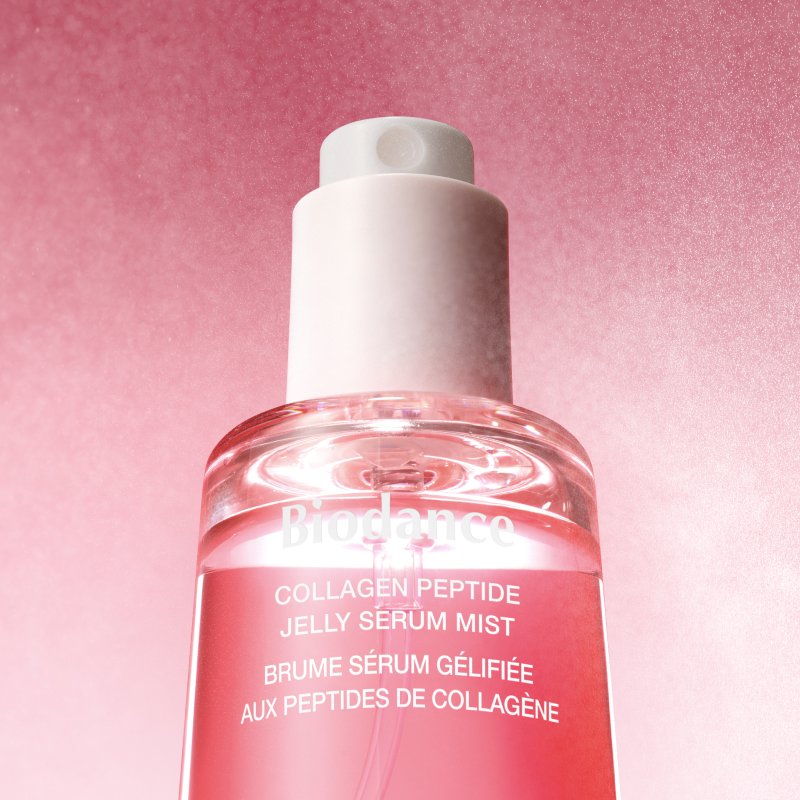
- Formulated with low-molecular collagen and peptides, it adopts a hydrogel base structure unlike regular water mists. 💧
- Initial spray instability reported (e.g., initial pumps not spraying or spitting out product). ⚠️
- Target skin type (according to marketing): Dry skin and internal dehydration types. 🏜️
🔍 Conflicting Perspectives You Need to See
| Perspective | Key Review | Reasoning |
|---|---|---|
| Water Mist Alternative Believers | Positive | High efficacy in solving dryness | Serum-like moisturizing feel, no greasiness like oil mists, effectively tackles internal dryness, versatile enough to use over makeup. ✨ |
| Functional Marketing Skeptics | Negative | Actual performance falls short of ads | Absence of advertised cooling effect, excessive oiliness creating a “grease film,” considered pricey for the amount. 📉 |
| Combination Skin Users | Conditional Positive | Requires localized application | Satisfaction increases by using sparingly on the T-zone and layering on the U-zone; sprays evenly when kept at the right distance (20cm). 🔄 |
| Oily Skin Users | Negative | Poor cosmetic compatibility | Excessive oiliness and shine lead some to repurpose the product for body use instead. 🙅♀️ |
❓ Burning Questions Fans Are Asking

Q1. Is the “jelly” texture of the Biodance Serum Mist really different from regular mists?
A1. Technically, yes! The core feature is its hydrogel base, designed to form a thin moisturizing coating layer on the skin instead of evaporating instantly like a standard water mist. 🌊 However, it’s also important to note that the term “jelly” might just be a marketing buzzword designed to hype up expectations. In reality, it’s just a slightly more clinging mist that doesn’t drip like water—it doesn’t stretch out like actual jelly when pumped into your hand! 🖐️
Q2. Why are reviews so polarized for the exact same product?
A2. Differences in skin type are the absolute dealbreaker here. 🧬 While forming a moisture barrier is a lifesaver for dry-to-normal dehydrated skin, oily skin types perceive that exact same barrier as a “suffocating” layer of oil. Plus, the “cooling effect” heavily pushed in marketing turns out to be weak or practically nonexistent, which deeply intensifies the clash between expectations and reality. It’s less of a product defect and more of a mismatch between marketing messaging and skin type compatibility! 🔥
Q3. Does the Olive Young exclusive positioning drive up the price?
A3. Directly, yes! At 15,500 KRW for 50ml, its price-per-ml is considerably higher than comparable competitors (like d’Alba White Truffle Serum, which goes for around 10,000 KRW for 150ml). 🏷️ The exclusivity of an Olive Young special edition and its “hard-to-find-elsewhere” premium positioning seem baked right into the price tag. This is a classic textbook example of modern K-beauty pricing relying on channel exclusivity and psychological scarcity rather than pure product value. 🛍️

💡 My Own Take on the Matter
The Biodance Serum Mist case highlights three very real problems currently facing the K-beauty market. 🧐
First, the gap between functional marketing and user experience. The product front-loads claims like “non-dripping spray” and “cooling sensation,” but real-world users find these features weak or missing entirely. The wider the gap between spec-sheet marketing and daily use, the faster consumer trust erodes. Consumers who have grown accustomed to performance-driven marketing simply won’t settle for a basic “moisturizing feel.” 🛑
Second, the polarized structure across skin types. The fact that the exact same mist is an “innovation” to one person and a “disappointment” to another means the product is heavily optimized for a very specific type (dehydrated/dry skin), yet marketed almost like a universal solution. Combination skin types are hit with the extra chore of localized application, which totally ruins the grab-and-go convenience of a mist! And the oiliness issue just makes oily folks steer clear entirely. 🤷♀️
Third, the feedback loop of channel exclusivity and pricing. Olive Young exclusives and limited-edition vibes are all deployed to justify a higher price point. In the end, consumers end up paying a premium for the scarcity mindset of “I can only buy this here,” rather than the intrinsic value of the formula itself. 🔄
What’s even more fascinating is the reports of some users “repurposing the mist for their bodies.” 🧴 This is a classic rationalization strategy consumers adopt when a product fails its intended purpose—while serving as the biggest red flag a manufacturer could possibly ask for!
In my opinion, this phenomenon is where the maturity of the K-beauty market paradoxically shows its cracks. Consumers have gotten smart enough to fact-check product performance, but brands and retail channels are still leaning heavily on emotional marketing and scarcity tactics. The wider that gap gets, the more “disappointed reviews” will flood the timeline! 📉
💬 Vibe Check: What Koreans Are Saying Online
User reviews paint a crystal-clear picture of a divided public opinion. 🗣️ Satisfied users constantly rave about “solving internal dehydration,” “being able to use it right over makeup,” and “getting that gorgeous dewy glow.” On the flip side, unhappy users consistently point out “lackluster real-world performance compared to the ads,” “too much oiliness,” and “disappointment for the price.” Some oily skin users even express regret, plotting out how to repurpose the product for other body parts. 🤷♂️ Honestly, rather than an objective product failure, this reaction leans much closer to a textbook case of “failed expectation setting.” 🎯
Source: https://blog.naver.com/PostView.naver?blogId=seohan0216&logNo=224361923615
 BIODANCE Collagen Peptides Jelly Serum Mist, Hydrating Face Mist, Plumping, Anti-Aging Face Spray, Sprayable Hydrogel, Travel Essentials & Self Care GAmazon.com: BIODANCE Collagen Peptides Jelly Serum Mist, Hydrating Face Mist, Plumping, Anti-Aging Face Spray, Sprayable Hydrogel, Travel Essentials & Self Care Gifts for Women, Korean Skin Care | 1.6Shop Now →
 BIODANCE Collagen Peptide Liposome Bubble Booster, Micro-Bubble Foam Essence for Elasticity and Plumping, Hydration & Skin Prep Boost, Quick Morning MAmazon.com: BIODANCE Collagen Peptide Liposome Bubble Booster, Micro-Bubble Foam Essence for Elasticity and Plumping, Hydration & Skin Prep Boost, Quick Morning Mask, Korean Skin Care | 3.21 fl.oz | MShop Now →
Related Stories
- Get That Glass Skin Like BLACKPINK’s Jisoo: Top 5 Ultimate Korean Luxury Skincare Essentials That Feel Like Pure Indulgence 💖
- Top 5 K-Beauty Serums Vested by Global Influencers You Need Right Now
- Why the COSRX Advanced Snail 96 Mucin Power Essence is Rewriting the Rules of Budget Skincare ✨
- Stray Kids & ENHYPEN Backstage Secrets: Top 5 K-Idol Skincare & Sheet Masks for Plump, Flawless Skin